Active Sensing with Passive Surfaces
A research project where robots carry unpowered panels that reflect radio signals, so we can map signal strength inside a building without putting a radio on every robot.
- Role
- Co-researcher
- With
- Even Goldberg
- When
- 2026–present
- Links
- 1transmitter
- 8×8elements on each panel
- ~100measurements to map a room
Background
To map signal strength across a building, you normally carry a radio to a lot of different spots. If robots do the job, each one needs its own radio, which costs money and drains the battery.
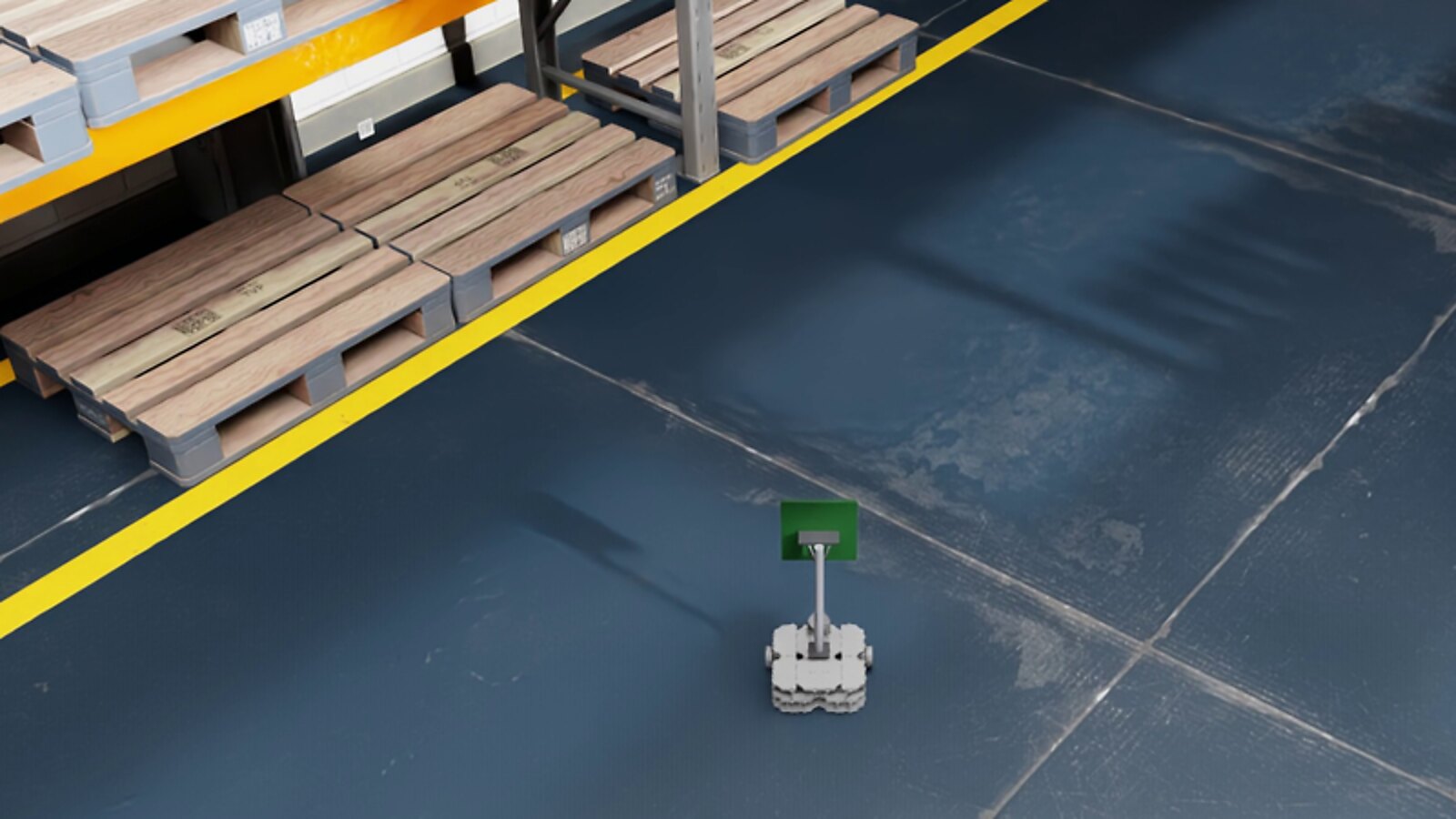
In our setup there’s just one transmitter on the wall. Each robot carries a flat panel that reflects the signal back and uses almost no power. The transmitter listens for those reflections and measures them.
Taking a measurement
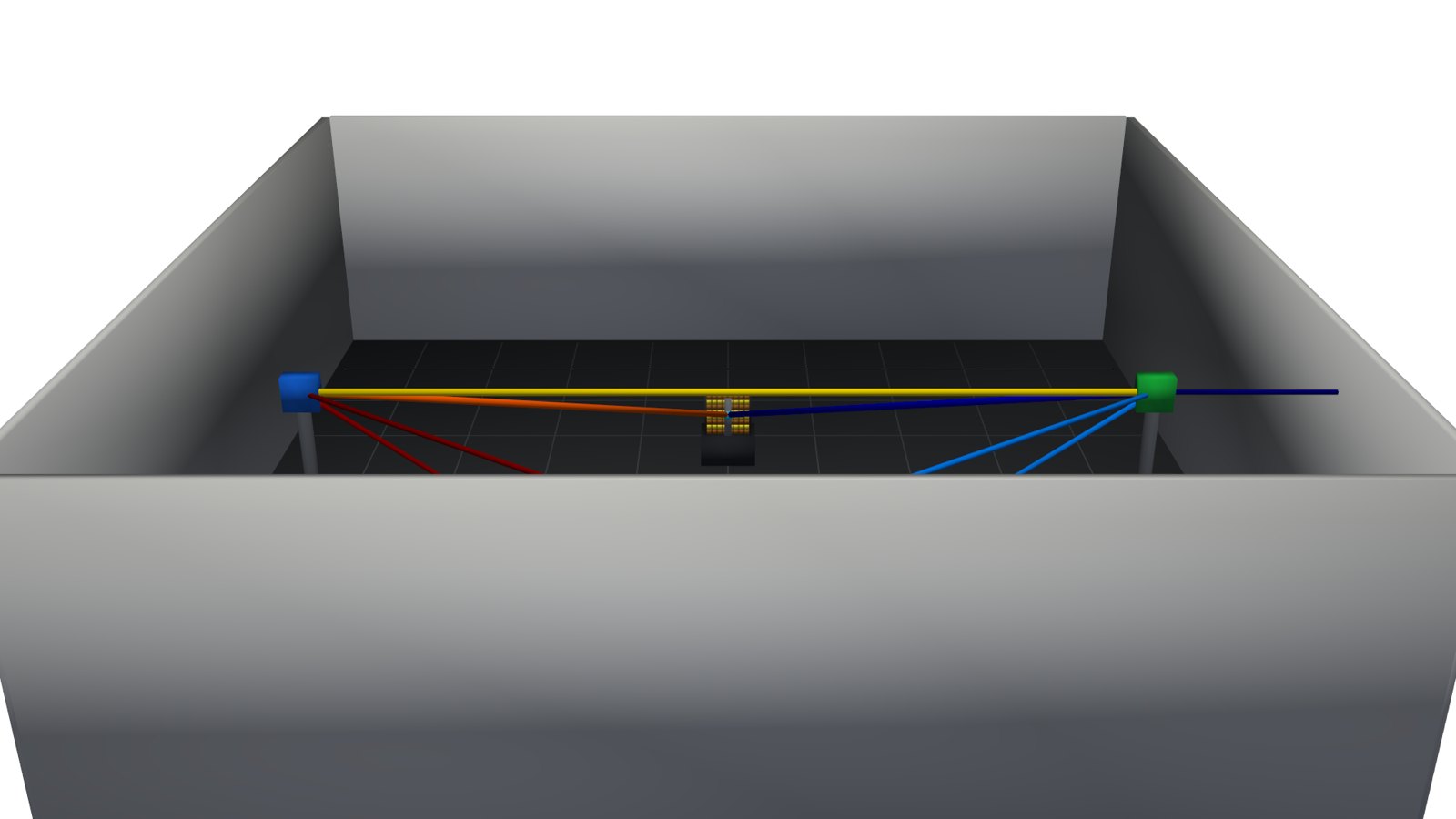
When a robot stops to measure, it turns to face four directions and sweeps its reflection across each one. Some of the signal comes straight back to the transmitter, and some bounces off walls on the way. The transmitter records how strong each reflection is and how long it took.
The robot’s reflection is much weaker than the reflections off the walls. To pick it out, the panel switches back and forth very quickly, and the transmitter only listens for a signal that flickers at that same rate.
Building the map
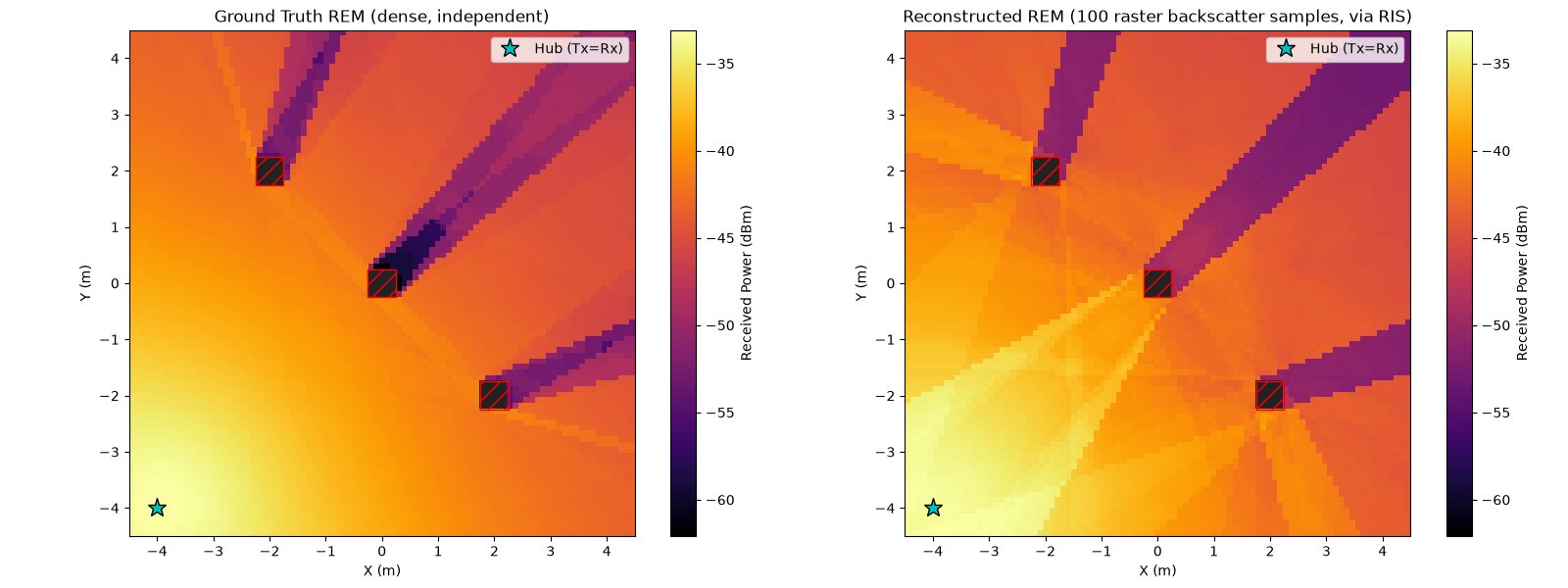
The measurements go into a statistical model. It estimates the signal everywhere in the room and how confident it is about each spot. It also knows the room’s layout, so it doesn’t assume the signal goes through walls.
The idea is for the robots to measure wherever the model is least sure, which is usually in dead zones and at the edges of shadows. That takes far fewer measurements than covering the whole room. In simulation, about 100 measurements were enough to get close to the real map.
Simulation
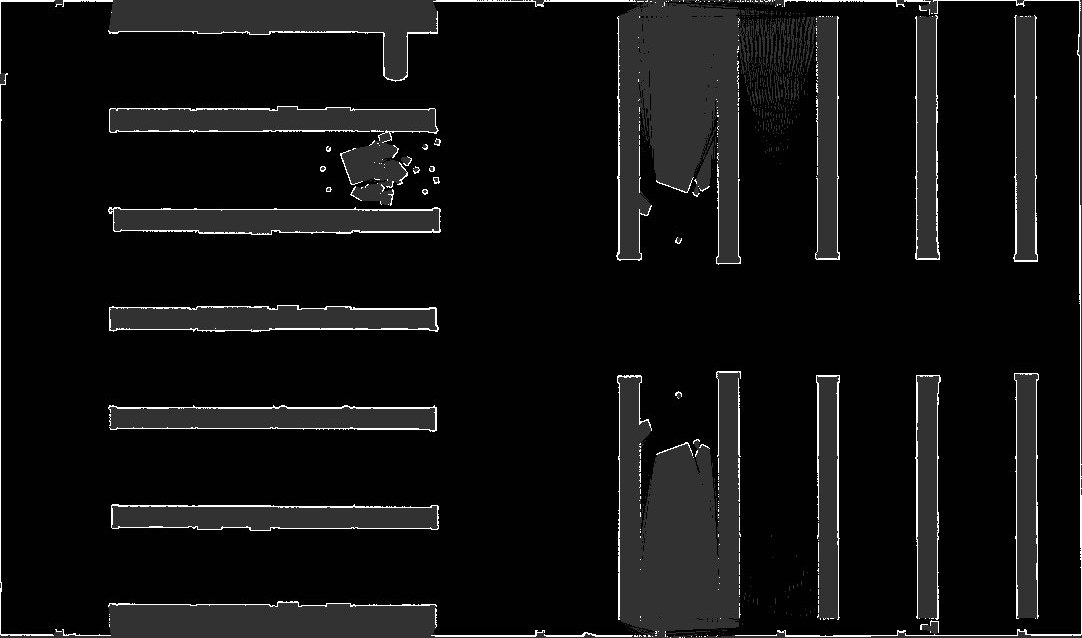
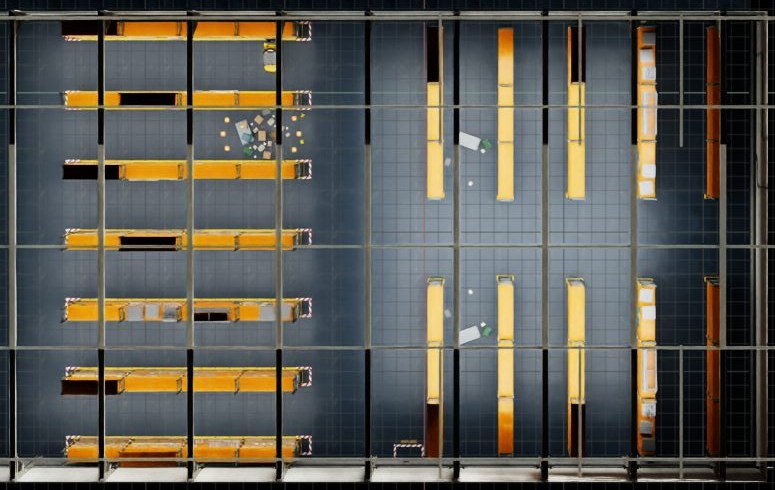
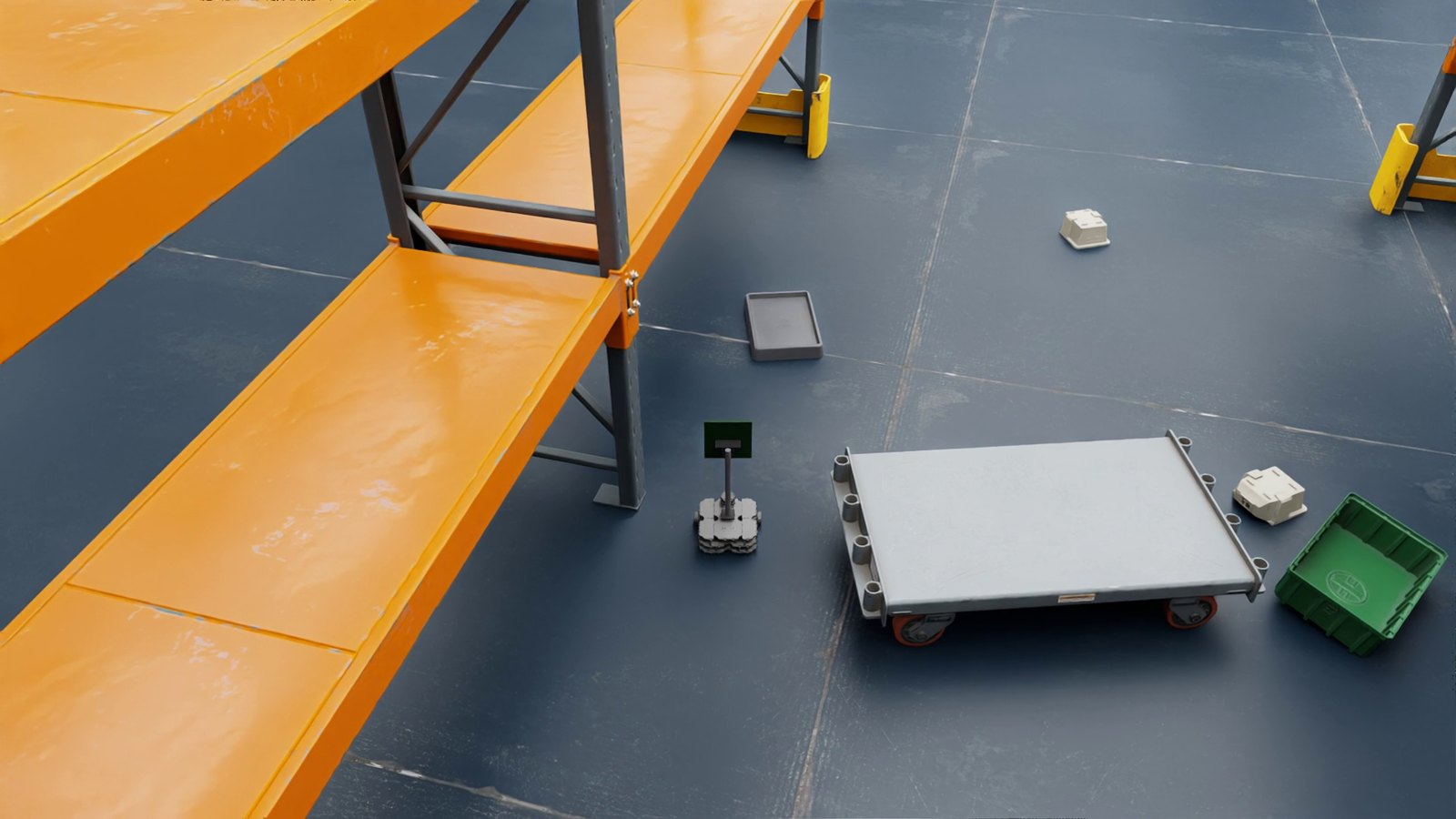
We’re doing everything in simulation first, on a research GPU cluster. In one simulator, a robot drives through a warehouse and maps it with LiDAR. Another simulator models how the radio waves bounce around. Right now we’re connecting the two, so the robot can measure the signal while it drives.
The panel
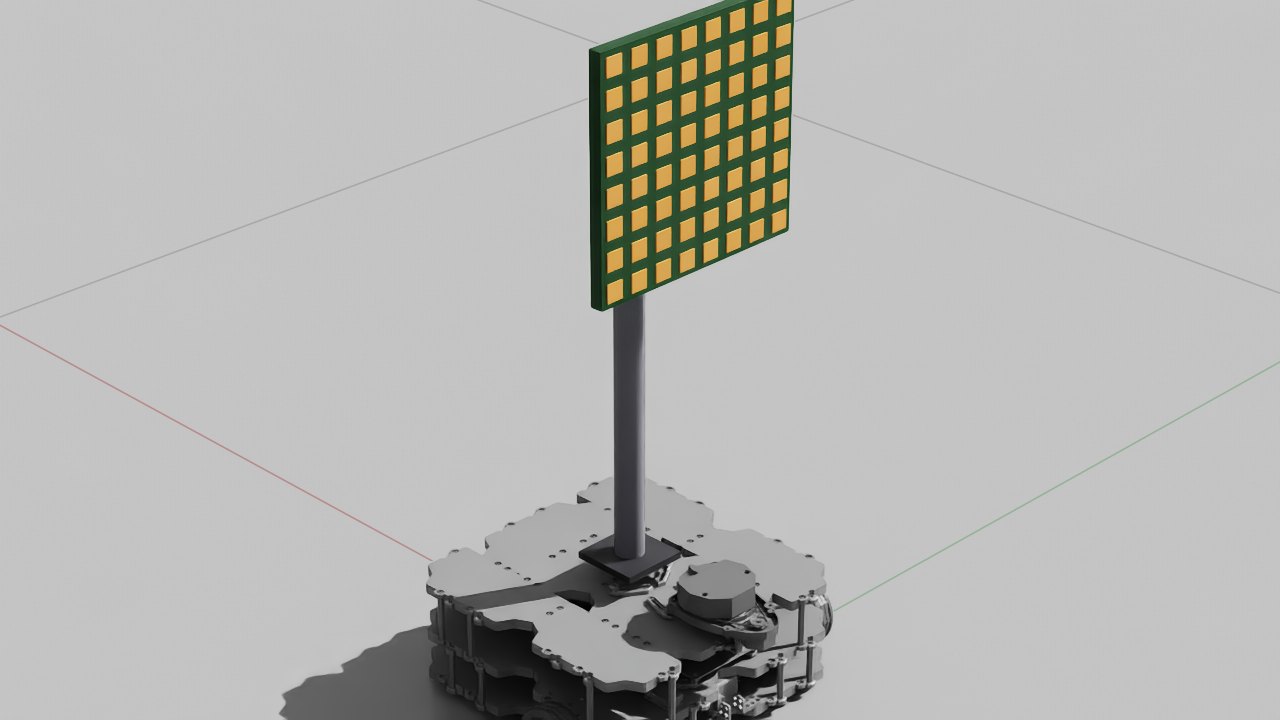
The panel is an 8×8 grid of small antenna elements, and each one has a switch. Turning on different combinations of switches points the reflection in different directions, so the panel can aim it without moving.
I’m designing the panel as a custom circuit board. It’s based on an open-source design that we changed to work at 5.8 GHz. Four boards can be put together to make a bigger panel.
Next steps
Before we order the board, we’re simulating each element to check that it reflects the way it should. Once it’s built, we’ll test it with lab equipment and then in a real room, and compare the results with the simulation. We plan to present our findings at the Synopsys Science Fair.
After that, we want to put the panel on a moving robot, and then run several robots at once. Each panel would switch at a different rate so the transmitter can tell them apart.
More images