Epitope Finder
A free web tool that helps transplant labs read antibody test results.
- Role
- Backend engineer & co-author
- Built with
- Manxuan Zhang (frontend)
- When
- 2024–2026
Background
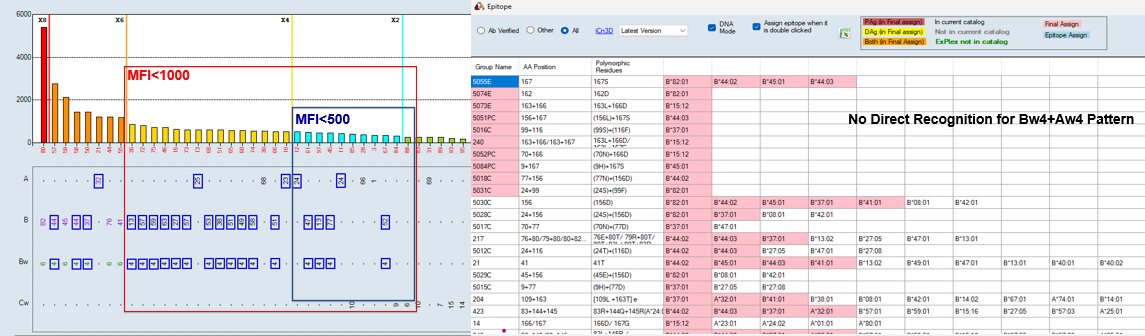
Before an organ transplant, the lab checks whether the patient has antibodies that could attack the donor’s organ. Reading those results is mostly done by hand, and weak signals usually get ignored.
We heard about a transplant lab that was spending a lot of time on this, so Manxuan Zhang and I offered to build them a free tool.
What it does
Antibodies don’t target a person’s whole tissue type. They target small pieces of it called eplets, and many tissue types share the same eplets. So results that look random can often be explained by just a few eplets.
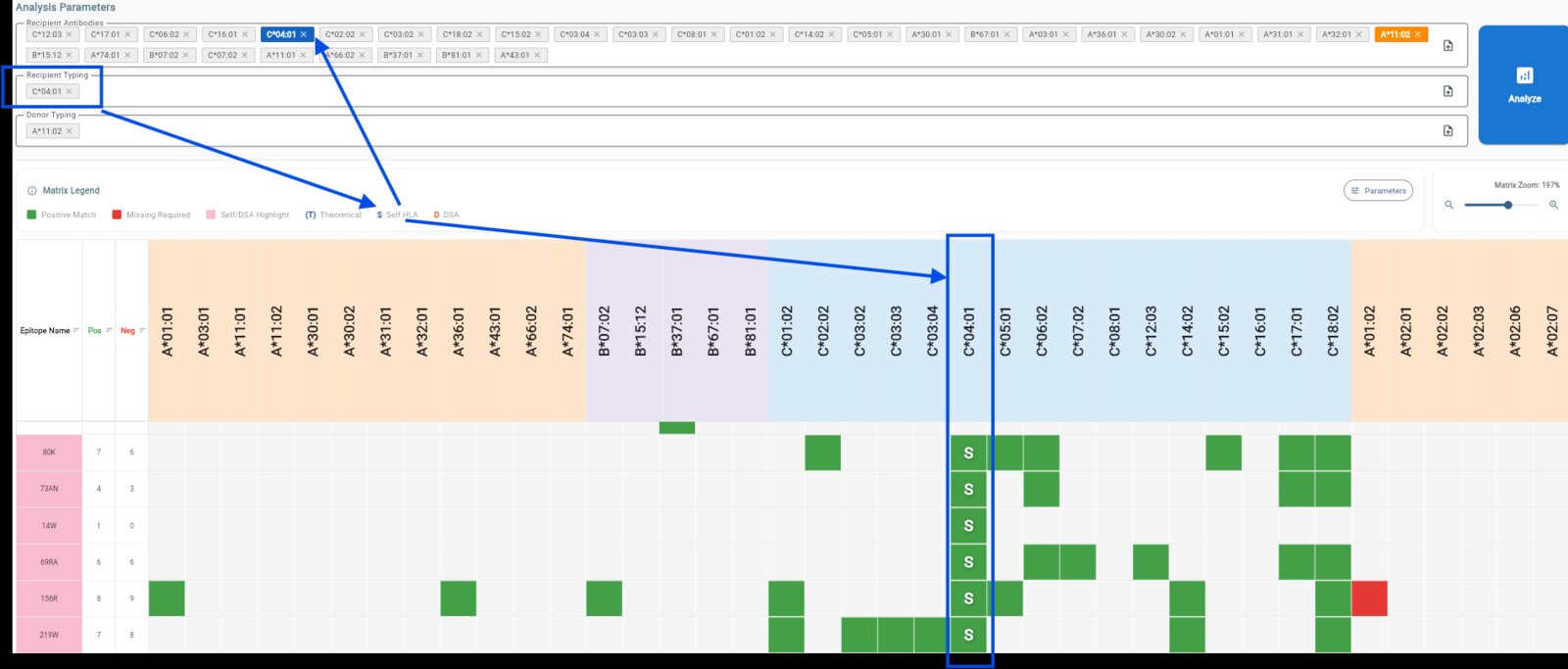
The lab enters the patient’s antibody results, the patient’s tissue type and the donor’s tissue type. Epitope Finder then shows which eplets best explain the results. It marks the eplets the patient has, since the body doesn’t make antibodies against its own. It also flags the eplets the donor has, because those are a risk for the transplant.
How I built it
I did the backend. I wrote a scraper that collects every eplet from the HLA Eplet Registry, a public reference, and stored the data in a database on Google Cloud. Then I wrote the code that matches a patient’s results against it. Manxuan built the web app that labs use.
Results
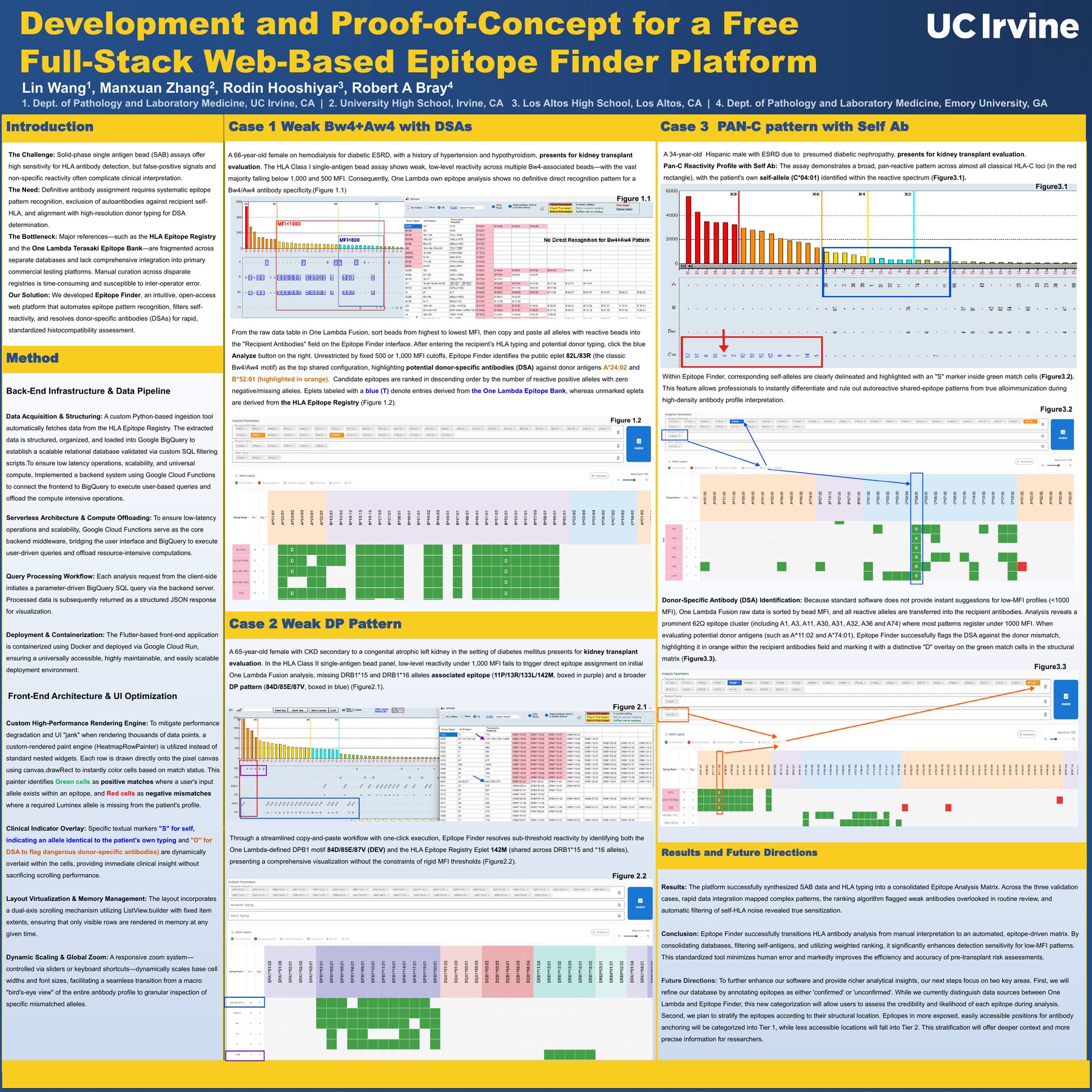
We tested it on real cases at UC Irvine School of Medicine. It found patterns in the weak signals, including some antibodies against the donor that had been missed.
We presented it at the 52nd Annual Meeting of the American Society for Histocompatibility and Immunogenetics, along with collaborators from UC Irvine and Emory.